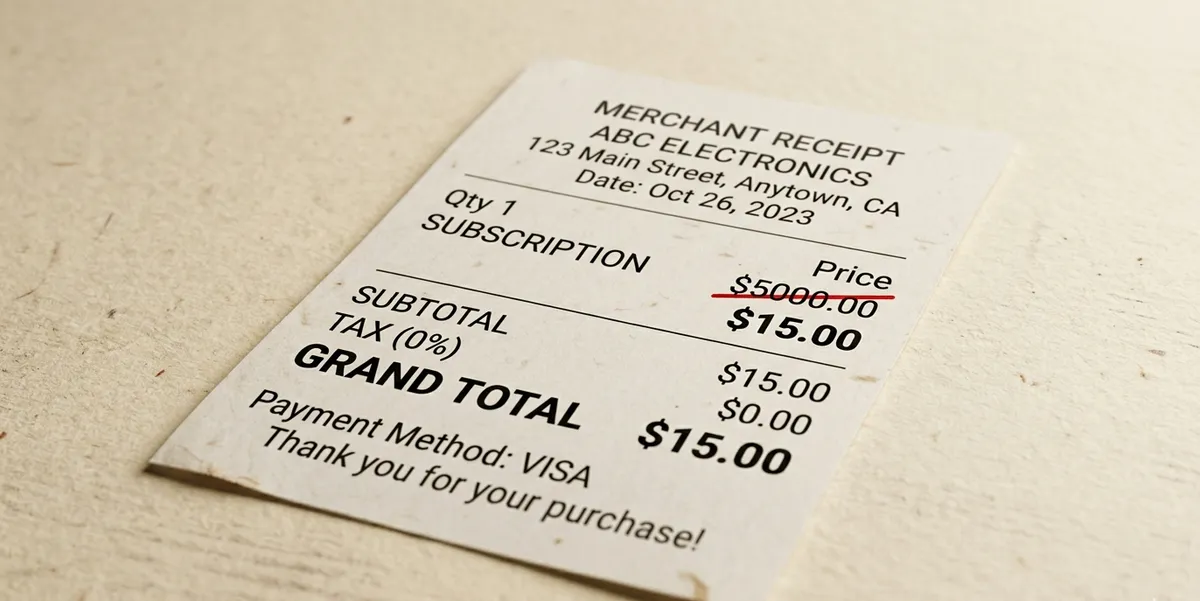
Interview prep doesn't have to cost $5,000
- JobHawk Team
- Interview prep
- 28 Apr, 2026
Interview bootcamps charge $5,000 to $12,000. Career coaches charge $150 an hour. Here’s what they actually teach, and how much of it you can get for $15 a month.
The interview prep market is wild
If you search for “interview preparation” right now, you’ll find options ranging from $0 to $12,000.
At the top, there are bootcamp-style programs. Interview Kickstart, the most well-known, charges between $5,000 and $12,000 depending on the track. Their tech-focused programs run toward the higher end. You get live sessions with instructors, mock interviews with industry professionals, and a structured curriculum that spans several weeks.
Below that, you have one-on-one career coaches. Rates vary, but $100 to $200 per hour is standard for someone with hiring experience. A typical engagement runs four to six sessions, which puts the total between $400 and $1,200. Some coaches charge more. The ones with big LinkedIn followings can charge $300 or $400 an hour.
Then there are the subscription tools. Careerflow offers AI interview prep at $44.99 a month as an add-on to their job tracking tool. A few others bundle lighter interview features into their paid plans but don’t make it the focus.
And then there’s the way most people actually prepare: alone, the night before, with Google and a vague sense of dread.
What $5,000 actually buys
The expensive programs aren’t scams. They teach real things. But when you strip away the branding and the testimonials, the curriculum comes down to a handful of core skills.
Company research. Every good prep program starts here. You learn to read a company’s 10-K, scan their recent press releases, understand their competitive position, and figure out what problems the team you’re interviewing with is probably trying to solve. A coach will walk you through this for each specific company. A bootcamp will teach you a repeatable process.
Story preparation. This is the STAR method and its variations. You build a library of experiences from your career and practice framing them as structured stories with a situation, your role in it, what you did, and what happened. The good programs push you to have 10 to 15 of these ready, covering different competencies: leadership, conflict, failure, ambiguity, technical problem-solving.
Question prediction. Experienced interviewers ask predictable questions. Not identical questions, but questions that follow patterns based on the role, the level, and the company’s culture. A coach who has interviewed at Google can tell you roughly what Google will ask. A bootcamp that has coached 500 people through Amazon interviews knows the leadership principle questions cold.
Mock practice. You rehearse answers out loud with someone who gives you feedback. This is the part that is hardest to replicate alone, and it’s the part that makes the biggest difference. Most people can think through a decent answer. Fewer can deliver one clearly, concisely, and confidently when someone is watching them.
That’s the core. Four things. Company research, story prep, question prediction, practice. Everything else in a $5,000 program is either supporting material (resume review, negotiation strategy, job sourcing help) or structure and accountability.
Where the price breaks down
The cost of interview prep is mostly the cost of people’s time. A coach who charges $150 an hour and spends six hours with you is charging $900, plus their own prep time for your specific situation. That’s honest pricing for skilled labor.
A bootcamp that charges $10,000 is paying instructors, building curriculum, running a cohort-based program, and maintaining a brand that justifies the price. The overhead is real.
But the actual knowledge transfer is not $5,000 worth of proprietary insight. The STAR method is on Wikipedia. Company research techniques are in every career book published in the last 20 years. Lists of common interview questions for specific companies are on Glassdoor, Blind, and Reddit.
What you’re paying for at the high end is two things: curation (someone has organized the information and built a sequence for learning it) and feedback (a real person watches you practice and tells you what to fix).
Curation is something software can do. Feedback is harder, but AI has gotten good enough at it that the gap between a $150-an-hour coach and an AI mock interview is smaller than it was two years ago. Not zero. But smaller than the price difference suggests.
What $15 a month gets you
JobHawk’s Essential plan includes interview prep because we think it belongs in the same tool where you track your applications. When you have an interview coming up, the prep should be right there, not in a separate subscription.
Here’s what that looks like in practice.
When you add an interview to your calendar in JobHawk, the system generates a company research brief. It pulls the company’s recent news, their products, their competitors, their Glassdoor ratings, and their hiring patterns. The kind of research that takes 45 minutes to do manually, delivered in about 30 seconds.
It predicts likely interview questions based on the role, the company, and the seniority level. Not generic “tell me about yourself” lists, but questions that reflect what that specific company tends to ask and what the role description emphasizes.
It helps you build STAR-format responses by prompting you with the right structure and suggesting which experiences from your background might be relevant. If you’ve told the system about your past roles, it can connect the dots between what the interviewer will probably ask and what you’ve actually done.
It drafts follow-up emails after the interview, which is a small thing that most people either skip or spend 30 minutes overthinking.
What it doesn’t do is watch you practice and give you real-time feedback on your delivery. That’s the gap. A human coach or a live mock interview partner catches things like filler words, rambling, nervous habits, and weak eye contact. AI can evaluate the content of your answer but not the performance of it. If you’re interviewing for a role where presentation matters as much as substance (executive positions, client-facing roles, sales), that gap matters more.
For most job seekers, though, the bottleneck isn’t delivery. It’s showing up unprepared. Walking into an interview without knowing what the company does, without having thought through likely questions, without a single structured story ready to go. That’s the gap that costs people offers, and it’s the gap that $15 a month closes.
The $4,985 question
Is a $5,000 bootcamp 333 times better than a $15 monthly subscription? No. That math doesn’t work for almost anyone.
Is a $5,000 bootcamp better? In some ways, yes. You get live instruction, peer cohorts, accountability, and expert feedback on your specific performance. Those things have value. If you’re targeting a $300,000 senior engineering role at a FAANG company and one round of coaching turns a rejection into an offer, the $5,000 pays for itself in two weeks of salary.
But most people aren’t in that situation. Most people are applying for roles that pay $60,000 to $120,000. They have two to five interviews in a given month. They need to walk in prepared, not perfect. For that level of preparation, paying $5,000 is like hiring a general contractor to hang a picture frame. The result might be slightly better, but the cost is wildly out of proportion to the task.
A $15 monthly subscription won’t replace a coach for high-stakes, career-defining interviews. We don’t pretend it does. But it will make sure you never walk into an interview without knowing the company, without anticipating the questions, and without having your stories organized. For most searches, that’s the difference between getting the offer and getting the “we’ve decided to move forward with other candidates” email.
Where to spend if you’re going to spend
Use a tool like JobHawk ($15/month) for every interview. Let it handle the research, the question prediction, and the story organization. This is your baseline prep, and it should happen for every conversation, from phone screen to final round.
If you’re interviewing for a role where the compensation jump would be $30,000 or more in annual salary, consider two or three sessions with a coach at $200 to $400 total. Use those sessions for mock practice, not for the research and planning that a tool can handle. You’ll get more value from a coach reacting to your actual performance than one walking you through how to Google a company.
Skip the $5,000 bootcamp unless the target compensation justifies it and you’ve exhausted cheaper options. The knowledge they teach is not secret. The structure is helpful. The price is hard to justify for most searches.
The interview is the highest-leverage moment in your job search. Preparing for it shouldn’t require a second mortgage.
Try JobHawk free →