The 10-minute post-interview habit most candidates skip
- JobHawk Team
- Interview prep
- 12 May, 2026
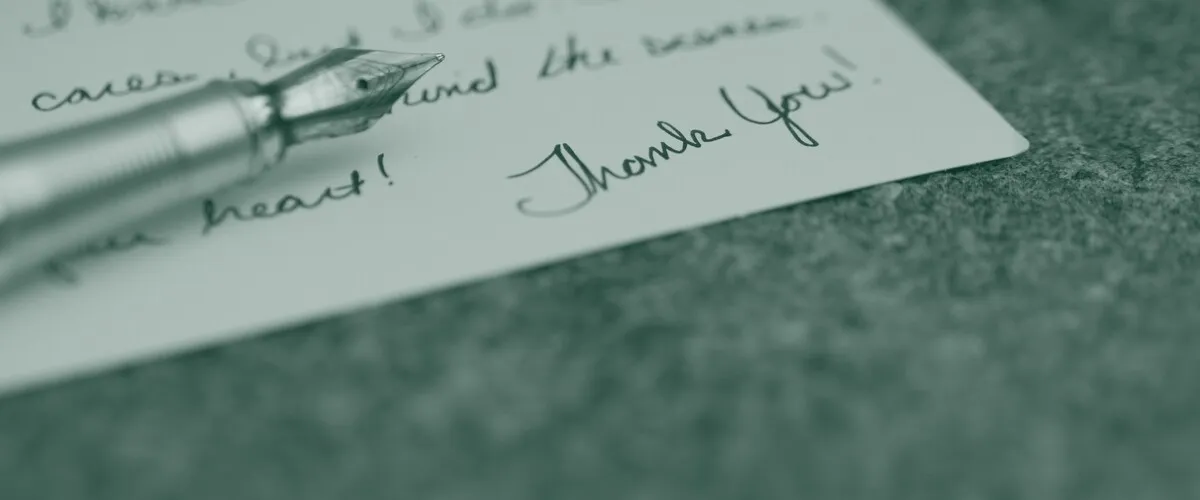
Most candidates skip the thank you note or send something generic. Here’s how to write one in 10 minutes that references your actual conversation and keeps you top of mind.
The email nobody sends
You just finished a 45-minute interview. Your brain is replaying every answer you gave, cataloging the ones that landed and wincing at the ones that didn’t. You get home, open your laptop, and think about sending a thank you note.
Then you don’t.
Maybe you tell yourself you’ll do it tomorrow. Maybe you open a blank email, stare at it for three minutes, type “Thank you for taking the time to speak with me today,” realize it sounds like every other thank you note ever written, and close the tab. Maybe you convince yourself it doesn’t actually matter and the hiring decision is already made.
You’re wrong on that last point. Hiring managers talk about candidates after interviews, and those conversations often happen the next morning. A thank you note that arrives before that conversation gives the interviewer something concrete to reference when they’re comparing you to four other people they talked to this week. It’s not the thing that gets you hired. It’s the thing that keeps you in the conversation.
Timing matters more than length
Send the note the same day as the interview. Within two hours is ideal. The longer you wait, the less useful it becomes, for two reasons.
First, you’ll forget the details. The specific question about your experience migrating legacy systems, the moment where the interviewer mentioned their team is moving to a new CI pipeline, the concern they raised about your lack of experience with their specific tech stack. These details are vivid right after the interview and gone by Thursday.
Second, the hiring team’s memory works the same way. If they interviewed four people on Tuesday and your note arrives Wednesday morning, you’re refreshing their memory while the conversation is still recent. If it arrives Friday, they’ve already had their debrief and formed their impressions without your input.
Same day. That’s the rule. If the interview is at 2 PM, the note goes out by 5 PM. If it’s a morning interview, send it after lunch. You don’t need to rush it, but you do need to do it today.
Three paragraphs, not five
The note should be short. Three paragraphs. Here’s what goes in each one.
The first paragraph is the thank you, and it should take one sentence. “Thank you for the conversation today about the senior engineer role.” That’s it. No effusive praise about how wonderful the team seems or how excited you are about the mission. Those sentences are filler and the interviewer knows it.
The second paragraph is the one that matters. This is where you reference something specific from the interview. Not the job description, not the company’s website, but something that actually came up in your conversation. A question they asked that you want to expand on. A topic they mentioned that connects to your experience. A concern they raised that you can address more directly now that you’ve had a few minutes to think about it.
Here’s an example of what this looks like: “You mentioned that the team is rebuilding the notification pipeline and that reliability has been a challenge during the migration. At my last company, we went through a similar rebuild on our event processing system. I should have mentioned that we ended up using a dual-write pattern during the transition, which let us validate the new pipeline against production traffic for two weeks before cutting over. I’d be happy to talk through the details of that approach if it would be useful.”
That paragraph does three things. It proves you were listening. It connects your experience to their specific problem. And it gives them a reason to want to talk to you again.
The third paragraph is the close. One sentence: you’re looking forward to the next steps, and they can reach you at this email or phone number. Done.
What to reference
The second paragraph is where people get stuck. They sat through a 45-minute conversation and can’t figure out what to mention.
Here’s what to look for, in order of usefulness.
A problem they described. If the interviewer talked about a challenge their team is facing, that’s the best possible material. Reference the problem and connect it to something you’ve done. You’re not solving it in an email. You’re signaling that you understood it and that your experience is relevant to it.
A question you wish you’d answered better. This happens in every interview. The interviewer asks something, you give an okay answer, and 20 minutes later you think of the answer you should have given. The thank you note is your chance to add that answer. “You asked about how I’ve handled competing priorities from multiple stakeholders. I gave the example from my current role, but a better one might be…” This is honest and it shows you’re reflective about your own performance.
A topic they seemed genuinely interested in. Sometimes an interviewer leans forward on a particular subject. Maybe it’s a technology you mentioned, maybe it’s an approach you described, maybe it’s a project they asked follow-up questions about. That’s the signal. Reference that topic and add one thing you didn’t get to say about it.
What you should not reference: generic company attributes (“I’m impressed by your commitment to innovation”), the interview logistics (“the office was lovely”), or your own enthusiasm (“I’m very excited about this opportunity”). These sentences fill space without adding information.
Panel interviews: one note per person
If you interviewed with multiple people, send a separate note to each one. Same three-paragraph structure, but the second paragraph should reference something different. Each interviewer asked different questions. Use what that specific person brought up.
Don’t send the same note to everyone on the panel. They will compare.
Common mistakes
Waiting too long. A note that arrives three days later reads more like a follow-up than a thank you. Same day is the rule.
Writing too much. Six or seven sentences, max. Three short paragraphs. The interviewer will skim anything longer.
Being too formal. “Dear Mr. Johnson, I wanted to express my sincere gratitude for the opportunity to discuss the Senior Product Manager position with your esteemed organization.” Nobody talks like this. First names and contractions are fine. Write like you’re emailing a colleague you respect.
Asking about timeline. The thank you note is not the place for “when can I expect to hear back?” That question belongs in the interview itself or in a separate follow-up later. Mixing it in makes the whole note feel transactional.
Where your interview notes come in
The reason most people struggle with thank you notes is that they don’t have notes from the interview. They walked in, had a conversation, walked out, and now they’re trying to reconstruct 45 minutes of dialogue from memory.
If you’re using JobHawk to prepare for interviews, you already have the job description, the company research brief, and the predicted questions in your pipeline. After the interview, you can log what actually came up: which questions they asked, what topics resonated, what concerns they raised. That log is your thank you note outline. Open it, pick the strongest item for your second paragraph, and write.
The prep and the follow-up are connected. What you research before the interview gives you context. What you notice during the interview gives you material. What you write after the interview puts that material to work. The thank you note is the last step in a process that started when you added the interview to your tracker.
Even without a tool, the principle holds. Jot down three things right after you leave the interview: one question they asked that you want to revisit, one problem they mentioned, and one topic where you connected. That’s your outline. Write the note from those three things and send it before dinner.
Ten minutes. That’s all it takes to do something most candidates won’t.
Try JobHawk free →